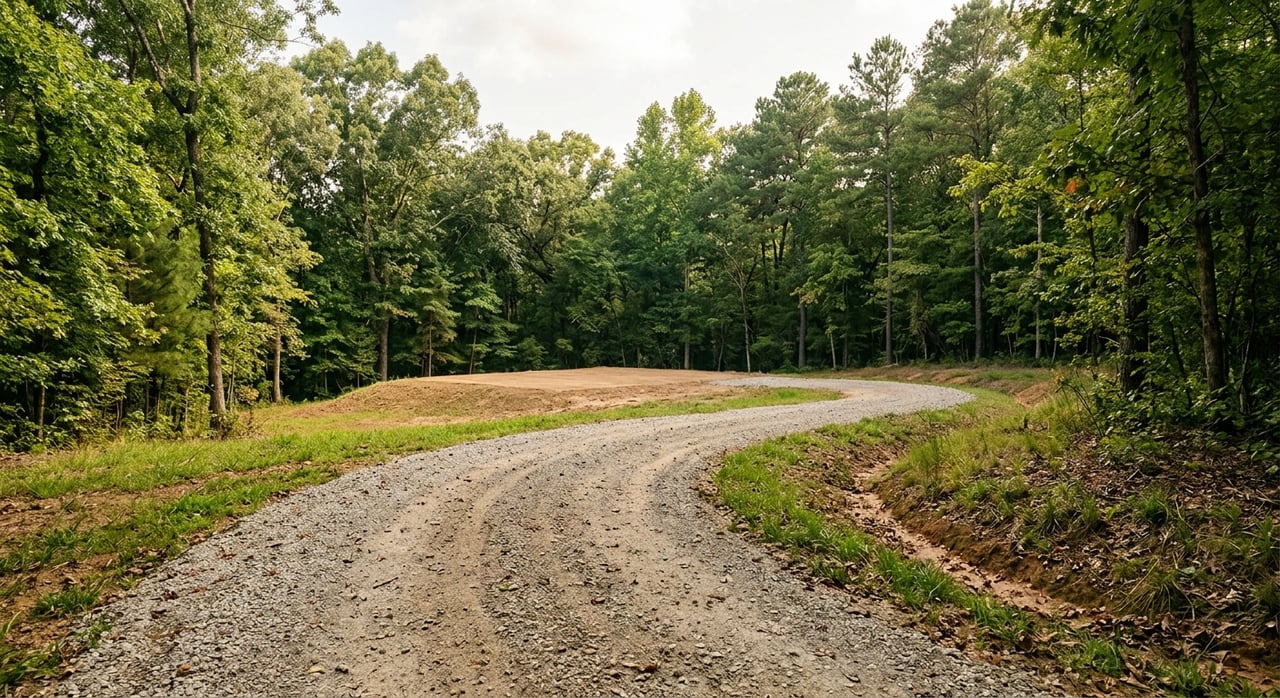
Buying land in Diana can feel simple at first glance. You find a pretty tract, picture your future home, and start imagining where the driveway, shop, or garden will go. But small acreage in East Texas comes with a few moving parts, and knowing what to check before closing can save you time, money, and stress. This guide will walk you through the biggest due diligence steps so you can buy with confidence. Let’s dive in.
Why Diana land buying is different
Diana is generally documented as an unincorporated community in eastern Upshur County, near the junction of State Highway 154 and U.S. Highway 259, about 11 miles east of Gilmer. Some utility service areas connected to Diana can also extend into Harrison and Marion counties. That matters because the exact location of a tract can affect which utility provider, county process, or service rules apply.
The land itself also shapes the buying process. Upshur County has rolling terrain, sandy acidic soils, Piney Woods vegetation, and average annual rainfall of about 45.74 inches. In practical terms, that means the best homesite is not always the most wooded spot or the highest point on a sketch. Drainage, soil conditions, and access often matter more than first impressions.
There is also a long history of oil, gas, and timber activity in the area, including gas discovered near Diana in the 1960s. If you are buying land for a homesite or long-term use, title review is especially important so you can understand any mineral reservations, easements, or use limitations tied to the property.
Start with access and legal layout
One of the first questions to ask is simple: How do you legally and physically get to the property? Rural land can look accessible on a map but still have issues with frontage, driveway placement, culverts, or county road requirements.
Upshur County Road & Bridge maintains permit information for culvert evaluation, utility permits, subdivision plat specs, overweight-load permits, and floodplain regulations. That is a good reminder that access is not just about whether a truck can pull in. It is also about whether the site can be improved in a way that meets county rules.
A current survey is one of the most helpful tools you can have during a land purchase. It helps confirm boundaries, frontage, easements, and the basic layout of the tract before you finalize plans for a home, barn, fence, or driveway.
Understand when platting may apply
If you are buying a tract that has been divided from a larger parcel, do not assume the split was handled correctly. In Upshur County, if land outside a municipality is divided into two or more parts for sale or development, a subdivision plat is required, and the Commissioners Court must approve it before it is filed with the County Clerk.
The county’s plat specifications also say subdivision plats should be prepared by a registered surveyor and should account for utility easements and roadways. For subdivision review, the county asks for letters from water, wastewater, and electric utilities confirming service availability.
If the tract is located in a city’s extra-territorial jurisdiction, the city must approve the subdivision first. Upshur County’s specs also require a percolation test unless the subdivision will be served by city sewer. If you are buying small acreage with plans to build soon, this is not a detail to leave for later.
Check water service early
Water should be confirmed early in the process, not after you are already emotionally committed to the property. Diana Special Utility District is the local water district in Diana, and its service notices make clear that some property splits and service extensions may require additional review.
According to the district’s subdivision and service-extension notice, land divided into two or more lots, or tracts requesting more than two water or sewer connections, must comply with the district’s subdivision policy. That process can involve formal applications, service-evaluation costs, fees, system improvements, and dedication of property or rights-of-way.
In plain terms, a tract having water “nearby” is not the same as having water ready to serve your homesite. You will want to verify whether the specific parcel can be connected, what the timeline may look like, and whether any extension costs apply.
Know your options for wells and septic
Not every tract will connect to public water, so some buyers consider a private well. Texas Commission on Environmental Quality provides a tool to help identify who supplies water to a property. If a tract relies on a private well, Texas landowners are responsible for managing the well, and the Texas Water Development Board says private well water quality is not regulated by the state and should be tested at least once a year.
For wastewater, septic feasibility should be checked early. TCEQ’s on-site sewage facility program covers septic permitting, construction, and maintenance requirements, which means you should treat septic planning as part of the buying decision, not a last-minute item before closing.
This is one area where Kylie’s construction-minded approach can be especially helpful. When you are evaluating raw land, the goal is not just to find acreage. It is to find acreage that can realistically support the home and layout you want.
Confirm electric service and extension costs
Electricity is another item buyers sometimes assume will be easy. Upshur Rural Electric Cooperative serves more than 51,000 meters across a ten-county area and offers a service-area map, but service territory alone does not answer every question.
Before you close, confirm the exact hookup situation for the parcel. Ask whether power is already available at the road, whether a new meter setup is needed, and whether line extension costs may apply based on the homesite location.
Those answers can affect both your budget and where you place improvements on the tract. A lower-priced piece of land can become much more expensive if utility extension costs are higher than expected.
Review floodplain and drainage conditions
Flood risk is worth reviewing on any acreage purchase, even if the property does not look obviously low. FEMA identifies its Flood Map Service Center as the official public source for flood-hazard information, and flood risk can exist in many areas.
Upshur County’s flood damage prevention ordinance specifically notes that it exists in part to notify buyers when property is in a flood area. It defines a special flood-hazard area as land with a 1% or greater annual chance of flooding.
For a buyer, the key takeaway is simple: do not rely on appearance alone. A survey, site review, and floodplain check can help you understand where a home, driveway, or shop may fit more safely and efficiently on the land.
Look closely at title and easements
Because this area has a long history of timber, oil, and gas activity, title review deserves extra attention. You will want to understand whether previous owners kept any mineral rights, whether utility or access easements cross the property, and whether any recorded restrictions could affect your future plans.
This is especially important if you want flexibility for building, fencing, timber use, or adding more than one structure. A tract can be beautiful and still come with limitations that change how you use it.
A clean, informed title review helps you avoid surprises later. It also gives you a clearer picture of what you are really buying beyond the number of acres shown in the listing.
Consider tax treatment for larger tracts
Some larger tracts may qualify for agricultural, open-space, or timber special appraisal. Upshur County Appraisal District forms include an agricultural questionnaire, Form 50-129 for 1-d-1 agricultural use, and a timber 1D1 application.
The important point is that qualifying land may be taxed based on productivity value rather than market value. If that matters to your budget, ask early whether the tract has a current special appraisal and what may happen if land use changes after the sale.
Tax treatment can affect your long-term ownership costs. It is one more reason land buying should be viewed as a full-picture decision rather than only a purchase-price decision.
Build your land-buying checklist
In Diana, buying land or small acreage is really a coordination project. The surveyor, title company, utility district, county, floodplain rules, septic requirements, and lender can all play a role.
A smart buyer usually works through these checkpoints before closing:
- Confirm legal access and road frontage
- Review a current survey
- Check whether platting or subdivision approval applies
- Verify water availability with the correct provider
- Review septic feasibility and any needed testing
- Confirm electric hookup location and extension costs
- Check floodplain status and drainage conditions
- Review title for easements, mineral reservations, and restrictions
- Ask about current tax treatment on larger tracts
- Match the homesite plan to the land’s actual buildable area
That last point matters more than many buyers expect. In Upshur County, terrain, rainfall, soils, septic requirements, and floodplain rules all work together. The best tract is usually the one that supports your plans with the fewest surprises.
Why local guidance matters
Land purchases ask different questions than a typical home purchase. You are not just evaluating bedrooms, finishes, or curb appeal. You are evaluating whether the property works for your goals from the ground up.
That is where local knowledge and practical construction awareness can make a real difference. When you have someone helping you think through access, drainage, utilities, and buildability early, you are in a much better position to make a sound decision.
If you are thinking about buying land or small acreage in Diana, working with a local real estate professional who understands East Texas property can help you move forward with clarity. For personalized guidance on land and homes in the area, reach out to Kylie Hicks.
FAQs
What should you check before buying land in Diana?
- You should confirm access, survey boundaries, water source, septic feasibility, electric service, floodplain status, title issues, and whether any platting or subdivision rules apply.
Does a small acreage tract in Diana always need a subdivision plat?
- Not always, but in Upshur County, land outside a municipality divided into two or more parts for sale or development generally requires a subdivision plat approved by the Commissioners Court before filing.
How do you verify water service for land in Diana?
- Start by checking whether Diana Special Utility District or another provider serves the parcel, then confirm the exact property’s connection options, requirements, and any possible extension costs.
Can you put a septic system on any tract in Diana?
- Not automatically. Septic systems must meet TCEQ on-site sewage facility requirements, so feasibility, permitting, and any needed testing should be reviewed early.
Why does floodplain status matter when buying acreage in Diana?
- Floodplain status can affect where you place a home, driveway, or other improvements, and Upshur County rules are designed in part to notify buyers when land is in a flood area.
Do mineral rights matter when buying land in Diana?
- Yes. Because the area has a history of oil, gas, and timber activity, title review is important to identify mineral reservations, easements, or other limits that could affect your plans.
Can larger tracts in Diana have lower property taxes?
- Some larger tracts may qualify for agricultural, open-space, or timber special appraisal, which can tax land based on productivity value rather than market value if the property meets the requirements.